

4.9 Star Rating | 1,733+ Google Reviews

4.9 Star Rating | 1,733+ Google Reviews
4.9 Star Rating | 1,733+ Google Reviews
What to Do If Your Water Heater Is Leaking From the Top
Big enough to tackle the toughest jobs, small enough to treat you like family.
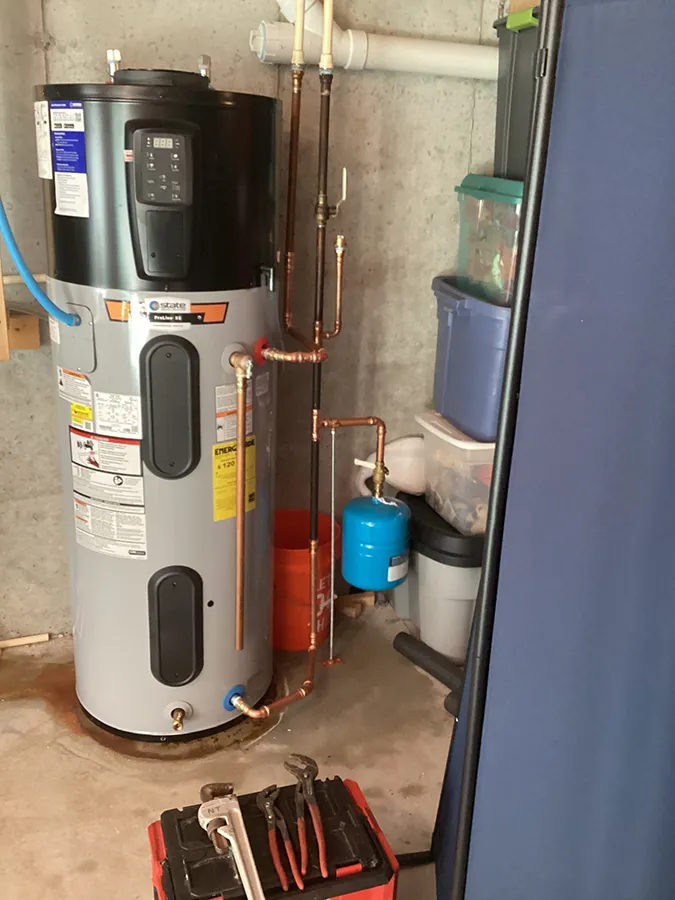
When your water heater in Franklin or Bellingham is leaking from the top, it’s a clear sign something isn’t right. Even small leaks can signal problems with your system’s safety or reliability. Beyond inconvenience and the threat of a cold shower, you also need to prioritize your safety above all else. Even a small drip can spread across the tank, work its way into ceilings or finished basements, and lead to costly water damage.
The good news is many topside leaks are repairable if caught early enough. Our team at G&C Plumbing & Heating is always here for water heater repair in Franklin, Bellingham, and beyond.
We also put together a clear, step-by-step guide on what to do first, what usually causes these leaks, and when to give us a call for fast, efficient, Franklin and Bellingham water heater service you can trust.
Make Sure the Area Around Your Water Heater Is Safe
Before inspecting the leak, it’s crucial to take a few quick steps to reduce the risk.
- Shut off the power or fuel: For electric water heaters, turn the breaker off. For gas units, set the control to Pilot or Off following the label instructions.
- Reduce water pressure: Close the cold-water inlet valve located at the top of the tank. Quarter-turn valves close when perpendicular to the pipe; wheel valves turn clockwise to close.
- Protect the space: Move nearby items out of the way and place towels or a pan where water is collecting.
- Never cap the relief discharge line: The temperature and pressure relief valve must remain open to the atmosphere. Capping it is unsafe and can create a serious hazard.
These steps can help limit the damage while you identify the source of the water heater leak.
Why the Top of Your Water Heater Is Leaking
If the top of your water heater is leaking, it’s probably not the tank itself. Instead, you probably have issues with your fittings or safety components. Some of the most common causes of top leaks include:
- Loose or corroded inlet and outlet connections
- Failing dielectric unions
- Seepage around the temperature and pressure relief valve threads
- Worn anode rod port gasket
Even flexible water connectors can crack or leak if they’re stressed, kinked, or improperly installed.
Sometimes a little condensation moisture is mistaken for a leak, especially after a cold-water refill in a humid basement. Water can run across the tank jacket, making the issue look worse than it is. Locating the exact source is key before deciding on repair or replacement.
High Water Pressure Can Cause Top-Side Leaks
One of the most commonly overlooked causes of top water heater leaks is excessive household water pressure.
Many homes in Franklin, Bellingham, and the surrounding areas end up with higher-than-recommended pressure from the local municipal supply. In other situations, homes may have aging pressure-reducing valves that no longer regulate properly.
When water pressure runs high, it places constant stress on your water heater’s fittings, nipples, and the relief valve. Thermal expansion only makes this issue worse. As your water heats, it expands, and without a working expansion tank, pressure builds inside the system. Relief valves can start to seep and threaded connections may loosen over time. If the water pressure problem isn’t addressed and fixed, the leaks can keep returning.
Local Water Quality Affects Water Heater Fittings and Seals
The chemistry of your local water supply also plays an integral role in top-side leaks. Mineral content and common treatment methods in Massachusetts can accelerate wear and tear on metal fittings, gaskets, and dielectric unions. At some point, corrosion buildup and gasket deterioration can add up and cause small leaks even if the tank itself is still in good condition.
Our team frequently sees this problem at inlet and outlet connections and around the anode rod access point. During service calls, our skilled technicians will take a look at mineral scaling and seal failure so repairs address the underlying cause, not just the visible moisture.
Quick Checks You Can Do on Your Water Heater in 10 Minutes
Without the right tools and know-how, you should only perform a few basic checks. Otherwise, you put yourself at risk and could void the warranty of your water heater or make the problem worse.
- Dry the top of the tank completely and watch where moisture reappears.
- Gently feel around the cold inlet, hot outlet, and relief valve for beads of water.
- Make sure the cold-water valve isn’t stuck half-open, which can cause seepage.
- Inspect flexible connectors for damp spots near the fittings.
Is the discharge pipe from the relief valve wet but the threaded connection above it dry? The valve could be opening because of excessive pressure or temperature.
Water Heater Repair vs. Replacement
Not every top leak means you need a new water heater. Most tank models last 8 to 12 years, and leaks around the fittings are often repairable. But if there’s moisture coming from the tank seam, it probably indicates internal failure. If your repair costs for the water heater are stacking up or nearing half the cost of replacement, replacement is usually the better investment.
Call G&C Plumbing & Heating for Water Heater Service Today!
Are you worried about your water heater leaking from the top? We can help. Our water heater experts at G&C Plumbing & Heating offer quick scheduling for no-hot-water situations, upfront pricing before work begins, and a personable, skilled team of techs.
Don’t wait for the problem to get any worse. G&C Plumbing & Heating is ready to help homeowners throughout Franklin, Bellingham, and surrounding communities with clear answers and reliable service.
Schedule your appointment today!
Trusted Plumbing & Heating Experts Serving Franklin and Surrounding Areas
We’re your neighbors here at G&C Plumbing & Heating, and nothing makes us prouder than keeping Franklin homes comfortable and functioning smoothly. Whether you’re dealing with a leaky pipe, a finicky furnace, or need a complete system upgrade, our friendly team of licensed professionals has been solving home comfort challenges all over town for years. We’ve built our reputation on honest work and straightforward solutions for all your plumbing and heating needs!
 All Service Areas



Rooted in the Franklin Community. Committed to Giving Back.
At G&C Plumbing & Heating, we’re not just here to fix leaks and install boilers—we’re proud to be part of the communities we serve. Whether we’re sponsoring local events, supporting youth programs, or showing up for neighbors in need, we believe in doing right by our town, both on and off the job.
Want to see what we’ve been up to lately?